
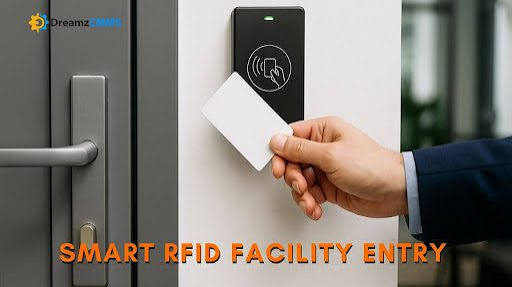
RFID Gate Technology and Its Growing Importance
RFID gate technology has become an essential part of modern automation, helping organizations improve security, efficiency, and asset visibility. RFID, or Radio Frequency Identification, uses radio waves to identify and track tagged objects without requiring direct contact or line-of-sight scanning. An RFID gate consists of strategically positioned RFID antennas and readers that automatically detect RFID tags as people, equipment, or products pass through a designated checkpoint. Unlike traditional barcode systems that require manual scanning, RFID gates provide hands-free identification, making operations significantly faster and more accurate.
Businesses across various industries have embraced RFID gate systems because they simplify inventory tracking, access control, and logistics management. Warehouses use RFID gates to monitor shipments entering and leaving storage facilities, while manufacturing plants rely on them to track production materials throughout the assembly process. Hospitals install RFID gates to protect valuable medical equipment and ensure critical assets remain within authorized areas. Libraries, retail stores, airports, and educational institutions also benefit from RFID gates for theft prevention and efficient resource management.
One of the biggest advantages of RFID gate technology is automation. Employees no longer need to manually scan each item individually, reducing labor requirements and minimizing human error. As tagged items move through an RFID gate, the system instantly records their identity, timestamp, and movement. This information is transferred to centralized software where managers can monitor inventory levels, analyze movement patterns, and generate detailed operational reports.
Modern RFID gates support multiple RFID standards and frequencies depending on application requirements. Ultra High Frequency (UHF) RFID gates are commonly used for logistics and warehouse management because they provide longer read ranges and can identify multiple tags simultaneously. High Frequency (HF) RFID systems are often selected for library management and secure document tracking. Organizations choose the appropriate configuration based on read distance, environmental conditions, and operational objectives.
Security is another important reason companies invest in RFID gate technology. Unauthorized removal of valuable assets can trigger immediate alarms when tagged equipment passes through an RFID gate without authorization. This capability significantly reduces theft, improves accountability, and strengthens overall facility security. With increasing demand for automation, digital transformation, and real-time visibility, RFID gate technology continues to play a central role in helping organizations optimize operations while maintaining high standards of safety and control.
Key Components and Working Principles of an RFID Gate System
An RFID gate operates through the coordination of several hardware and software components working together to identify and process RFID tags in real time. Understanding these components helps businesses appreciate how the system delivers accurate tracking and reliable performance across various environments.
The RFID reader serves as the central processing unit of the gate system. It generates radio frequency signals that communicate with RFID tags attached to products, equipment, or identification cards. Once the tag enters the reader’s electromagnetic field, it transmits its unique identification information back to the reader. Advanced readers can process hundreds of tags within seconds, making them suitable for busy operational environments.
RFID antennas are strategically positioned on both sides or above the passageway to create a controlled reading zone. Their placement determines the coverage area and reading accuracy. Multiple antennas work together to eliminate blind spots and ensure tags are detected regardless of orientation. Proper antenna design is essential for achieving consistent performance, especially in facilities with high traffic volumes.
RFID tags represent another critical component. Passive RFID tags receive power from the reader’s radio waves and require no internal battery, making them cost-effective for inventory management. Active RFID tags include built-in batteries that provide longer communication ranges and are commonly used for tracking high-value assets or vehicles. Semi-passive tags combine features of both technologies to meet specialized operational needs.
Middleware software acts as the communication bridge between RFID hardware and enterprise management systems. It filters duplicate reads, validates collected data, and integrates information into inventory management, warehouse management, or enterprise resource planning platforms. This software ensures organizations receive meaningful insights rather than overwhelming volumes of raw RFID data.
Gate structures themselves are designed to withstand demanding industrial environments while maintaining reliable read performance. Durable construction materials protect sensitive electronic components from dust, vibration, and environmental exposure. Many Portique RFID also incorporate visual indicators, alarm systems, traffic lights, and display panels to assist operators during daily operations.
When a tagged object passes through the RFID gate, the reader continuously transmits radio signals. The RFID tag responds with its stored identification number, allowing the system to verify whether the movement is authorized. If all conditions meet predefined rules, the transaction is recorded automatically. If an unauthorized movement occurs, alarms, notifications, or automated security actions can be triggered immediately. This seamless interaction between hardware and software enables organizations to maintain accurate records while reducing manual intervention and improving operational reliability.
Applications of RFID Gates Across Multiple Industries
RFID gate technology has become increasingly valuable across numerous industries because it delivers automated identification, improved operational efficiency, and enhanced security. Organizations continue discovering new ways to integrate RFID gates into daily workflows as digital transformation accelerates worldwide.
Warehousing and logistics represent one of the largest application areas for RFID gate systems. Distribution centers process thousands of incoming and outgoing shipments every day, making manual inventory verification time-consuming and prone to errors. RFID gates automatically record pallet movements as goods enter or leave loading docks, ensuring inventory records remain accurate without interrupting workflow. This automation speeds receiving operations, reduces shipping mistakes, and improves overall supply chain visibility.
Manufacturing companies also depend on RFID gates to monitor raw materials, work-in-progress inventory, and finished products throughout production. Real-time tracking allows production managers to identify bottlenecks, optimize material flow, and minimize production delays. Automated identification reduces paperwork while supporting lean manufacturing initiatives focused on efficiency and waste reduction.
Healthcare facilities benefit significantly from RFID gate technology. Hospitals invest heavily in expensive medical devices such as infusion pumps, wheelchairs, portable imaging equipment, and surgical instruments. RFID gates help prevent unauthorized removal while providing staff with accurate location information. Medical personnel spend less time searching for equipment, enabling them to focus more attention on patient care.
Retail organizations use RFID gates to strengthen inventory management and reduce shrinkage. Merchandise tagged with RFID labels can be tracked throughout the supply chain, improving stock accuracy and replenishment planning. Security gates installed at store exits immediately detect unpaid merchandise, reducing theft while maintaining a convenient shopping experience for customers.
Libraries have long relied on RFID gate systems for efficient circulation management and theft prevention. Books equipped with RFID tags can be checked in and out quickly, while security gates monitor unauthorized removal. Library staff spend less time handling routine transactions and more time supporting educational services.
Educational institutions, government agencies, corporate offices, and research laboratories utilize RFID gates for secure access control and asset protection. Employee identification cards equipped with RFID technology simplify authorized entry while maintaining detailed access logs for security audits.
Transportation hubs, airports, and shipping terminals also integrate RFID gates into baggage handling, cargo management, and vehicle identification systems. Automated tracking improves operational coordination while minimizing delays associated with manual verification procedures.
As organizations continue embracing Industry 4.0 initiatives, RFID gate technology supports broader automation strategies by delivering reliable real-time data that enhances operational visibility, improves resource utilization, and strengthens overall decision-making.
Benefits of Implementing RFID Gate Solutions
Organizations implementing RFID gate technology experience numerous operational, financial, and security advantages that contribute to long-term business success. The combination of automated identification, real-time tracking, and seamless system integration makes RFID gates a valuable investment for businesses of all sizes.
One of the most significant benefits is improved inventory accuracy. Manual inventory processes often produce discrepancies caused by scanning errors, misplaced products, or incomplete documentation. RFID gates automatically capture movement information whenever tagged assets pass through designated checkpoints, ensuring inventory records remain current without additional manual effort.
Operational efficiency improves dramatically because RFID gates eliminate repetitive scanning tasks. Employees no longer need to individually scan each product, pallet, or piece of equipment. Instead, multiple tagged items can be identified simultaneously while moving through the gate, reducing processing times and increasing productivity throughout the organization.
Enhanced security represents another major advantage. RFID gates continuously monitor asset movement and immediately detect unauthorized removals. Automatic alarms alert security personnel before valuable equipment leaves restricted areas, reducing theft and improving accountability. Organizations handling sensitive information, confidential documents, or expensive equipment particularly benefit from these security capabilities.
Labor cost reductions occur because automated identification minimizes the need for manual data collection. Employees can redirect their efforts toward higher-value activities such as customer service, process improvement, or strategic planning instead of performing repetitive inventory checks. Over time, these efficiency gains contribute to measurable operational savings.
Real-time visibility provides managers with accurate information regarding asset location, inventory movement, and operational performance. Instant access to reliable data supports better planning, forecasting, and decision-making. Historical movement records also help organizations identify inefficiencies, optimize workflows, and improve resource allocation.
RFID gate systems integrate easily with enterprise software platforms, including warehouse management systems, manufacturing execution systems, and enterprise resource planning solutions. This integration creates a connected information ecosystem where operational data flows automatically between departments, eliminating duplicate data entry and improving organizational coordination.
Customer satisfaction also improves because accurate inventory information reduces stock shortages, shipping errors, and order delays. Faster processing enables organizations to fulfill customer requests more efficiently while maintaining high service standards.
Scalability further enhances the value of RFID gate technology. Businesses can expand their RFID infrastructure as operations grow without replacing existing systems. Additional readers, antennas, and software modules can be integrated into current deployments, protecting initial investments while supporting future business expansion. These combined benefits make RFID gates an increasingly important component of modern digital operations.
Future Trends and Choosing the Right RFID Gate Solution
As businesses continue investing in digital transformation, RFID gate technology is evolving rapidly to meet changing operational demands. Emerging innovations focus on improving reading accuracy, expanding system intelligence, and integrating RFID data with advanced analytics platforms that support smarter business decisions.
Artificial intelligence is becoming an important addition to RFID systems. AI-powered software analyzes RFID movement patterns to identify unusual behavior, predict inventory shortages, and optimize operational workflows. Machine learning algorithms continuously improve system performance by recognizing recurring operational trends and recommending efficiency improvements based on historical data.
The Internet of Things (IoT) further enhances RFID gate capabilities by connecting readers, sensors, cameras, and enterprise systems into unified digital ecosystems. This connectivity allows organizations to monitor assets in real time across multiple facilities while receiving automated alerts whenever predefined conditions occur. Combined with cloud computing, managers gain remote visibility into operations from virtually any location.
Improved RFID hardware continues expanding application possibilities. Modern readers provide faster processing speeds, higher read accuracy, and greater resistance to environmental interference. Enhanced antenna designs improve tag detection even in challenging industrial environments containing metal structures or dense product arrangements. These technological improvements increase reliability while reducing implementation complexity.
Sustainability also influences RFID gate development. Manufacturers increasingly design energy-efficient readers and environmentally friendly RFID tags that minimize electronic waste. Organizations pursuing sustainability initiatives appreciate technologies that reduce paper documentation, improve inventory efficiency, and decrease unnecessary transportation through better operational planning.
Selecting the right RFID gate solution requires careful evaluation of operational requirements. Organizations should first identify the specific assets, products, or personnel requiring tracking. Environmental conditions, reading distance, traffic volume, and software integration requirements all influence equipment selection. Facilities handling high volumes of inventory may prioritize multi-tag reading performance, while security-focused environments may emphasize alarm capabilities and access control integration.
Vendor experience plays an important role in successful implementation. Experienced RFID solution providers assist with site surveys, system design, hardware selection, installation, testing, and ongoing technical support. Comprehensive training ensures employees understand system operation and can maximize long-term return on investment.
Future RFID gate systems will likely become even more intelligent through greater integration with robotics, autonomous vehicles, predictive analytics, and digital twin technologies. As organizations increasingly rely on automation to improve competitiveness, RFID gates will remain a foundational technology supporting secure access, accurate inventory management, operational transparency, and data-driven decision-making. Businesses that invest in well-designed RFID gate solutions today position themselves for greater efficiency, stronger security, and sustainable growth in an increasingly connected digital economy.
